From Fukuoka: Dazaifu in Oita, Kyushu & Beppu Ropeway & Yufuin 1 Day Tour
$43.36
Per Person
What To Expect
Overview
- In Dazaifu, one can immerse in Japanese history and culture, visit the ancient shrines, experience the rich cultural atmosphere, and appreciate the elegance of the literati
- You may choose to take the Beppu Ropeway at your own expense. This aerial cable car connects Beppu with the mountainside of Mount Tsurumi, offering panoramic views of Beppu Bay and the surrounding mountain ranges.
- Stroll around the town of Yufuin Onsen, encounter unique streets, enjoy the rural scenery, taste the local special cuisine, and also experience the comfort of hot springs. Feel the unique charm of the town during the leisurely time
Itinerary
Fukuoka - Beppu Ropeway/Umi Jigoku-Yufuin Onsen - Return
08:30 LAWSON Oriental Hotel Fukuoka Store 4-23 Hakataekichuogai, Hakata Ward, Fukuoka, 812-0012, Japan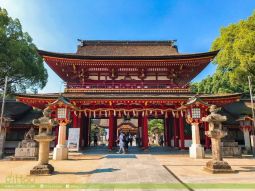
Dazaifu Tenmangu
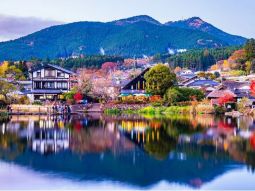
Yufuin Onsen
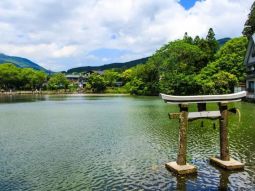
Kinjiko Lake
08:30 Fukuoka
Start today's beautiful journey.
09:10 Fukuoka
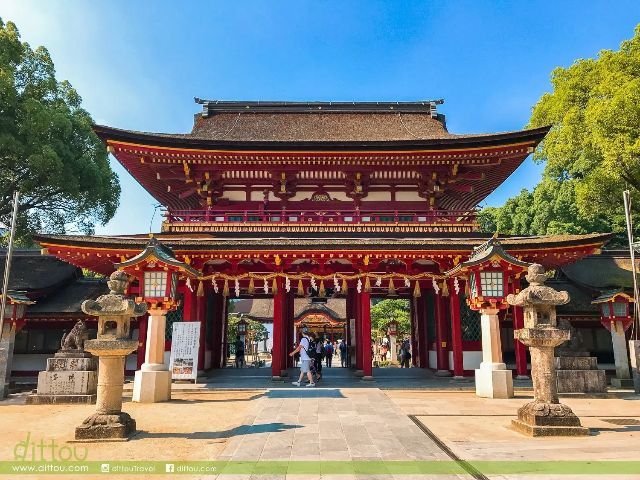
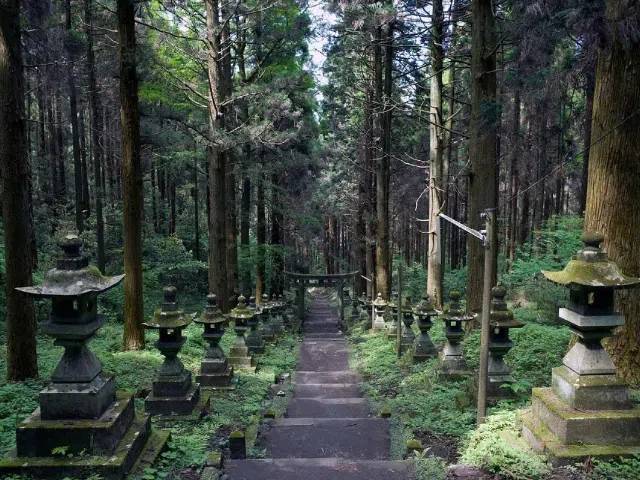
Dazaifu Tenmangu Shrine — the head shrine dedicated to Sugawara no Michizane, the deity of scholarship (around 90 minutes of free time available)
Dazaifu Tenmangu Shrine enshrines the widely revered deity of learning Sugawara no Michizane. It serves as the head shrine of roughly 12,000 Tenmangu shrines across Japan and ranks as the largest Shinto shrine in Kyushu, attracting countless visitors from home and abroad.
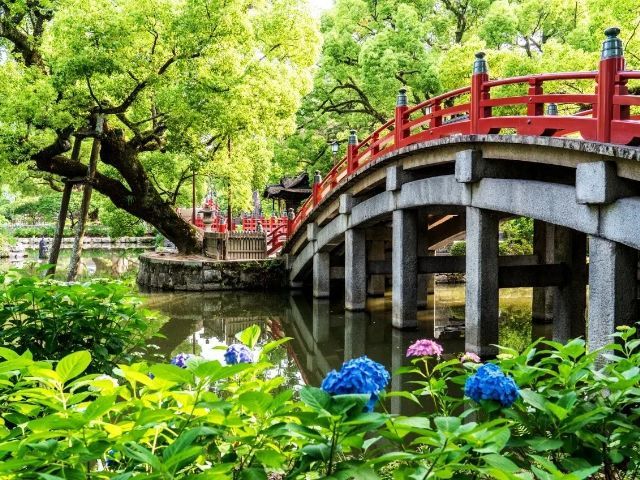
Beyond the vermilion-painted main hall and its surrounding sacred garden, the shrine grounds house numerous historic structures including Tenkai Inari Shrine, the Treasure Hall and the Sugawara Historical Museum. The site boasts distinct scenery across all four seasons, featuring broadleaf mahoganies and camphor trees designated natural monuments, as well as successive blooms of plum blossoms and irises. Plum blossoms were Michizane’s favourite flower, and the plum blossom motif is adopted as the shrine’s official crest, making the plum blossom season exceptionally distinctive. The sacred flying plum tree, standing to the right directly opposite the main hall, is famously known for the legend that it flew all the way from Kyoto to Dazaifu in a single night out of longing for Sugawara no Michizane.
A diverse range of festivals and events are held here throughout the year, offering an abundance of highlights that embody its over 1,100 years of enduring history.
Academic Success Prayers
Sugawara no Michizane is closely associated with academic pursuits. Japanese students often visit this shrine before exams to pray for passing tests and successful admission to schools. Prayer charms can be purchased at the shrine office beside the main hall. During exam seasons, the shrine’s entrance gate is strung with countless ema wooden prayer plaques, forming a spectacular sight.
Notably, the Dazaifu branch of Ichiran Ramen offers an exclusive five-compartment ramen bowl for Dazaifu visitors, whose Japanese pronunciation is a homophone for "passing an examination".
Lining the approach leading to Dazaifu Tenmangu are rows of popular snack stalls and souvenir shops well worth exploring. The local umegae mochi is an absolute must-try treat: its chewy outer skin encloses sweet red bean filling with a perfectly balanced sweetness that never feels cloying.
12:40 Oita
Beppu Ropeway – An aerial cable car connecting Beppu and the mountainside of Mount Tsurumi, offering panoramic views of Beppu Bay and surrounding mountain ranges (approximately 60 minutes of free time; cable car fares are at your own expense).
The Beppu Ropeway is situated in Beppu City, Oita Prefecture, Japan, serving as a key sightseeing transport to Mount Tsurumi (1,375 meters above sea level). Stretching roughly 1,816 meters in total length with a one-way ride duration of about 10 minutes, the cable car is supported by multiple pylons along the route. Riding the ropeway allows visitors to overlook the stunning scenery of downtown Beppu, Beppu Bay and the encircling mountains.
The ropeway features two terminals: the Foothill Station and the Summit Station. The Foothill Station enjoys convenient access via public buses and a parking lot for tourists. The Summit Station acts as the starting point for hiking and sightseeing, equipped with walking trails, observation decks and a teahouse where visitors can rest and take in 360-degree panoramic views.
Each season boasts distinct scenery: hillsides blanketed with cherry blossoms in spring; a cool climate making it a perfect summer retreat; breathtaking fiery red foliage carpeting the forests in autumn; and snowscapes plus rime ice creating a fairy-tale wonderland in winter. The summit of Mount Tsurumi is a beloved spot for hikers and photography enthusiasts, and it also offers distant views of steam rising from Beppu’s hot spring resorts, making it an ideal destination to experience Beppu’s natural and cultural charm.
Fare rates for the Beppu Ropeway are listed below:
Seniors (aged 70 and above): 1,700 Japanese Yen for a round trip
Adults (junior high school students and older / aged 13 and above): 1,800 Japanese Yen for a round trip
Children (ages 4 to elementary school students): 900 Japanese Yen for a round trip
Ages 0 to 3: Free of charge
※Should the Beppu Ropeway suspend operations, the itinerary will be switched to Umi Jigoku (Sea Hell) with entry fees borne by visitors themselves.
The ropeway will be out of service for regular inspections from June 22 to July 17, 2026, during which the trip will be replaced with a visit to Umi Jigoku.
Located within Beppu’s hot spring district in Japan, Umi Jigoku is one of the renowned Eight Hells of Beppu. It earns its name from its extremely hot spring water that steams and churns like the infernal underworld. The hot spring water displays a distinctive shade of blue or green alongside a strong sulfur odor, presenting a spectacular and mysterious landscape. Visitors can walk along sightseeing paths to get up close to fumaroles and hot spring pools while learning about hot spring geology and natural phenomena. More than a natural marvel, Umi Jigoku stands as a landmark destination for immersing oneself in Beppu’s hot spring culture.
Adults (high school students and older): 500 Japanese Yen
Children (elementary and junior high school students): 250 Japanese Yen
The Beppu Ropeway is also one of Kyushu’s most popular cherry blossom viewing spots.
Cherry blossom season is generally expected from late March to early April each year (all timings are subject to local weather conditions).
Every spring, thousands of cherry trees, predominantly Somei Yoshino cherry blossoms, bloom sequentially from the foot to the peak of Mount Tsurumi. Thanks to the significant elevation difference, visitors can enjoy a unique three-dimensional cherry blossom viewing experience: blossoms bloom earlier at the mountain base, followed by those on the mid-slope and summit at higher altitudes, extending the overall blooming period.
As the cable car ascends slowly, passengers get a bird’s-eye view of cherry blossom carpets blanketing the hillsides, with the pale pink sea of flowers contrasting beautifully against the deep blue Beppu Bay in the distance, forming a magnificent vista. On clear days, sweeping views of downtown Beppu and the vast Seto Inland Sea stretch out on the horizon.
Upon reaching the summit, visitors can continue admiring the cherry blossoms and overlook the entire hot spring city of Beppu from the observation deck. The blend of spring cherry blossoms, blue bay waters and the hot spring townscape forms one of the most iconic natural landscapes of Beppu in spring.
14:10 Oita
Yufuin Town (also known as Yubu-in) (approximately 140 minutes in total, free time for self-guided activities; lunch at your own expense). You may get off the bus at this scenic spot.
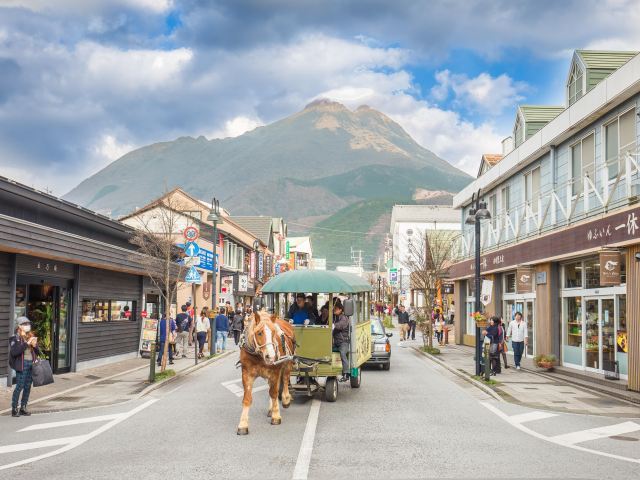
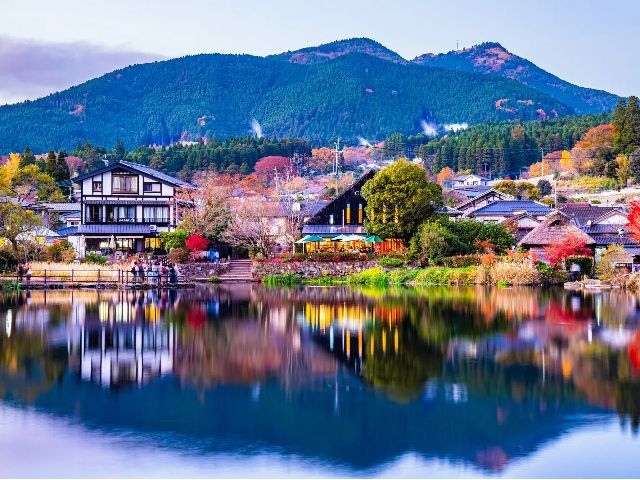
Yufuin (alternatively called Yubu-in) has been ranked the top tourist destination in polls voted by Japanese young women. Surrounded by lofty mountains, it exudes an air of tranquility and gentleness that lets visitors unwind thoroughly. Moreover, numerous exquisite dessert shops here are immensely popular among female travelers. Feasting your eyes on stunning scenery while indulging in delicious treats fills you with a strong sense of happiness. There is also a great variety of cafes dotted around the town, where you can pick a distinctive one to sit down, sip a cup of coffee and savour a leisurely moment.
The Yufuin Horse-Drawn Carriage Tours date back more than 30 years and have become a signature tourist attraction of Yufuin. The route departs from JR Yufuin Station, passes Fukuzen-ji Temple and Unagi Hime Shrine, and loops back to the station, with the whole journey lasting around 60 minutes. As the horses trot gently in the soft breeze, you can gaze out at the idyllic pastoral scenery backed by Mount Yufu, calming your mind and escaping the hustle and bustle of daily life.
Yunotsubo Kaido (self-guided visit)
Nestled at the foot of Mount Yufu, Yunotsubo Street is lined with souvenir shops selling local specialties of Oita such as yuzu kosho citrus pepper, as well as restaurants serving local delicacies including fried chicken and tempura, drawing a constant stream of tourists. In addition, the riverside of the Oita River just one street away is a highly recommended walking spot. You can admire seasonal views and soak up the rustic, laid-back pastoral charm unique to Yufuin here.
Kinrin Lake (self-guided visit)
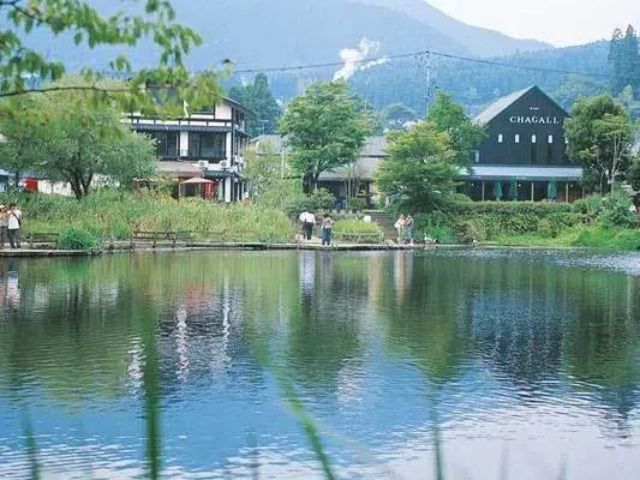
Kinrin Lake is the most iconic scenic spot in Yufuin. Situated at the base of Mount Yufu, it was originally named Gakumoto Pond or Geku Pond. In 1884, a Confucian scholar named Mokuriku Kusan saw golden glimmers shimmering off the fish scales on the lake surface under the setting sun and thus gave it the name Kinrin Lake, meaning Golden Scale Lake. The lake has a circumference of roughly 400 meters and a maximum depth of 2 meters. Hot spring water surges from the western bottom of the lake, while fresh clear water wells up from the east. The temperature difference between the two water sources causes thick mist to shroud the lake once the temperature drops, creating a dreamlike, ethereal wonderland. It is truly a one-of-a-kind lake. Beside Kinrin Lake stands Tenso Shrine; its torii gate by the lakeside appears to float on the water amid the hazy mist, adding an air of mystery and building a surreal atmosphere. A stroll along the lakeside is an absolute must to experience the allure of Kinrin Lake when visiting Yufuin.
Every spring, cherry blossoms bloom along both banks of the Oita River. Under the blue sky dotted with white clouds and with Mount Yufu as the backdrop, pale pink cherry blossom petals drift down alongside blooming rapeseed flowers on the riverbanks, painting a vivid and picturesque spring landscape.
Yufuin Flower Village (self-guided visit)
Located in Yufu City, Oita Prefecture, Japan, Yufuin Flower Village is a tourist village themed around flowers and natural landscapes. Its architecture draws inspiration from British countryside style, with streets, houses and boutique shops brimming with strong exotic flair. Visitors can wander through gardens bursting with seasonal blooms and lush greenery, and relax in charming cafes and specialty stores for a laid-back experience.
The village opens all year round, with spring and autumn being the prime seasons for flower viewing. Ideal for photography and casual walks, it is a perfect destination to appreciate exotic architectural aesthetics and the beauty of nature.
Recommended Foot Spa Experience – Hot Foot Spring Cafe (expense borne by visitors)
This newly opened facility centered on foot baths and coffee has earned rave reviews from visitors at home and abroad since its launch.
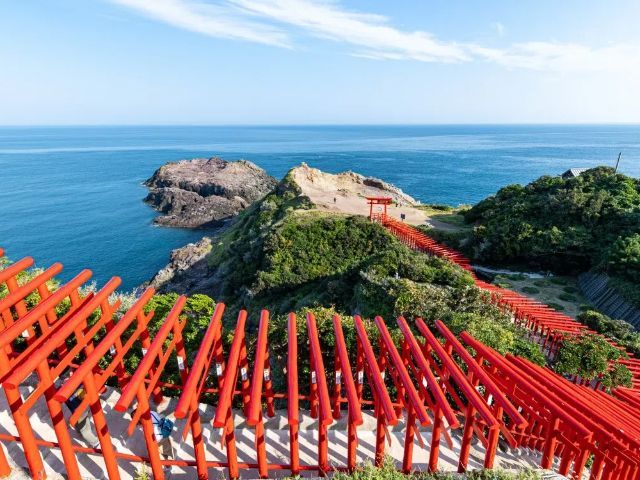
Walk along the path lined with a red torii gate, and you will spot a wall lined with beckoning Maneki-neko lucky cat figurines.
The venue can accommodate around 50 guests at once. You can soak your feet to relieve fatigue while enjoying coffee with family or friends.
Entry Fee: 1,500 Japanese Yen per person (includes foot bath service, a towel and one drink).
Recommended Attraction – Showa-kan: Step back into Japan’s Showa Era (admission fee at your own cost)
The museum recreates retro streetscapes from the 1950s, evoking nostalgic memories of life and culture from that period. Old-fashioned candy stores, general merchandise shops, barbershops and even ordinary residential houses allow visitors to feel as if they have instantly travelled back to 1950s Japan.
Reference Admission Fees: Adults 1,200 Japanese Yen per person; Ages 12–17: 1,100 Japanese Yen per person; Ages 4–11: 600 Japanese Yen per person.
Recommended Day Trip Hot Spring Experience – Yufuin Sansoukan (hot spring entry fee at your own expense)
Situated close to Yufuin Station, Yufuin Sansoukan is a renowned hot spring ryokan in Yufuin. Nestled near Mount Yufu, its standout feature is the panoramic view of Mount Yufu. It is equipped with outdoor open-air baths, indoor and outdoor hot spring pools, and massage baths.
Reference Hot Spring Fees: Adults 700 Japanese Yen per person; Children aged 4–12: 400 Japanese Yen per person. Please note that hot spring bathing may be unavailable on certain days due to facility maintenance or operational conditions, and we appreciate your understanding.
Cherry Blossom Viewing in Yufuin
The annual cherry blossom season is generally expected to fall from late March to early April (all schedules are subject to actual on-site weather conditions).
Though not a renowned major cherry blossom viewing spot, Yufuin boasts plenty of cherry trees around Kinrin Lake, the JR Station and the path leading to Yunotsubo Street.
Strolling around while admiring the blossoms during cherry blossom season is the most relaxing way for numerous tourists to enjoy the flowers. In spring, cherry blossoms blend with the tranquil vibe of this hot spring town, forming a classic rural spring scenery unique to Japan.
Heading south from the JR Station along the Oita River lies one of Yufuin’s most famous cherry blossom spots. A large number of Somei Yoshino cherry trees are planted around Oki Shrine.
When cherry blossoms are in full bloom in spring, the sea of pink flowers sets off the ancient shrine architecture, creating an exceptionally peaceful atmosphere that embodies the charm of a traditional Japanese rural shrine. Many photography enthusiasts make special trips here to take photos.
Visitors may arrange their itinerary freely according to personal plans.
18:20 Fukuoka
Arrive at Hakata Station and conclude the tour.
- Meals not included
- Hotel not included
- 18:20 Return to boarding point, return time for reference only
-
Things to Know
- The above itinerary time may be adjusted according to weather, road conditions and other reasons. Please understand.
Packages
Bus Tour
Adult
$43.36Child
Same as Adult
Pick Up/Drop Off Information
Pick Up
| Location | Time | Address |
| LAWSON Oriental Hotel Fukuoka Store Please arrive 10 minutes prior to the scheduled time. | 09:00 | 4-23 Hakataekichuogai, Hakata Ward, Fukuoka, 812-0012, Japan |
Drop Off
| Location | Time | Address |
| LAWSON Oriental Hotel Fukuoka Store | 18:20 | 4-23 Hakataekichuogai, Hakata Ward, Fukuoka, 812-0012, Japan |
Things to Know
Included/Exclude
- Vehicle service fees listed in the itinerary
- Vehicle fuel costs, tolls, and highway tolls
- Vehicle service time: within 10 hours (Japanese law)
- Driver's service fee (the actual vihicle will be adjusted according to the number of people on the day of the tour)
- Vehicle service fees listed in the itinerary
- Vehicle fuel costs, tolls, and highway tolls
- Vehicle service time: within 10 hours (Japanese law)
- Driver service fee (exquisite small group of 1-13 people; bus group of 14-45 people, actual will be adjusted according to the number of people in the group on that day)
- Reference model:5-8Car: ToyotaAlphardor equivalent;9-14Car: ToyotaHAICEor equivalent;18-22Vehicle: minibus;twenty twoCars and above: large buses. The above vehicles are for reference only. The actual number will be adjusted according to the number of people traveling on the day.
- Children under 3 years old are free of charge without occupying a seat. Please inform us in advance when registering; children over 3 years old are treated as adults.
- Foot bath recommendation - [Foot Bath Caf] Fee: 1,500 Japanese yen per person (including foot bath, towel, and beverage)
- [Yufuin Showa Museum] Reference fee: Adults: 1,200 Japanese yen per person; Ages 12 - 17: 1,100 Japanese yen per person; Ages 4 - 11: 600 Japanese yen per person.
- Hot Spring Experience - [Yufuin Sansuikan] Reference Fee: Adults: 700 Japanese yen per person; Children aged 4 - 12: 400 Japanese yen per person.
- Accommodation expenses, meals, local self-funded projects and other personal consumption expenses
- One-day Tour, it is not recommended to carry luggage, if you need to carry luggage, please register clearly when you book your order. 1 luggage is allowed per person. An extra 100 yuan per piece will be charged if you failed to make a note when booking your order or if it turns out more than 1 piece of luggage per guest.
- Other items not mentioned in the above [fee included]
Booking and Confirmation Process
- Due to high demand, inventory is mostly synchronous but sometimes not. Our consultant will check real time availability onsite and confirm seats.
- You will receive your booking information instantly via email. In the event that you do not receive our email, please check your spam folder, or log into your User Center to check your order status and download your voucher when available.
How To Use
- The night before the tour, you will receive a departure reminder email in your mailbox, which contains the vehicle registration number, the contact information of the guide and the pick up time. Guides do not initiate contact with guests.Please wait for the bus at the specified location according to the meeting time in the email.
- One-day trip itinerary, it is not recommended to carry luggage, if you need to carry luggage, please register clearly when you book your order. 1 luggage is allowed per person. An extra 100 yuan per piece will be charged if you failed to make a note when booking your order or if it turns out more than 1 piece of luggage per guest.
- Once confirmed, the date cannot be changed, late or no-show will be non-refundable.
- Be sure to provide complete information (name + number of people + phone number + WeChat ID + pick-up location) when making a reservation to avoid errors that may affect the itinerary.
- During the trip, please carry your passport and valuables with you and keep them safe. If there is any loss, theft, damage, etc., you will be responsible for it yourself.
- Elderly people, patients with cardiovascular diseases such as hypertension, heart disease, and pregnant women are advised to be accompanied by relatives.
- This trip does not accept solo registration from customers under the age of 18. If you want to register, please ask your guardian to sign up for this trip together.
- This itinerary is a fixed itinerary for carpooling. Customers who are also participating in this itinerary must abide by the stay time at each attraction and follow the driver's arrangements. If you want to flexibly adjust your itinerary, please refer to our chartered tour service.
- Please note that if you fail to participate or cancel the trip due to personal problems, lateness, etc., no fees will be refunded.
- If a person leaves the group on his own during the trip, the transaction will be deemed invalid and no fees will be refunded. And if this results in personal or property safety, you must bear the consequences yourself.
- The arrival time of each trip may change due to traffic conditions, weather, festivals, and crowds on the day. If the trip is delayed or canceled due to the aforementioned or other force majeure factors, please forgive me and you will not be able to request a refund.
- Please wear light, suitable travel clothing and shoes to participate in this trip.
- Please be sure to abide by local laws and regulations in Japan, and do not carry items prohibited by Japanese law to avoid violating the law and affecting your own rights and interests.
- When moving freely, you should pay attention to your own personal and property safety. If you fail to listen to advice and an accident occurs or causes losses, you will be responsible for the consequences.
Terms & Conditions
What is the cancellation policy?
Cancellation Period
Policy
What if you miss the appointed time or departure date?
Once the booking is confirmed, an absence or failure to show up on the scheduled date or time is a no-show. No refunds or reschedules will be issued for no-shows and late arrivals.
Other important information
- Seniors aged 70 years and above (inclusive) must ensure that they are in good health and suitable to travel, and must be accompanied by family members or friends over the age of 22 throughout the trip.
- Minors under the age of 18 must be accompanied by at least one adult passenger throughout the trip.
- The elderly need a health certificate. To check the health certificate, please fill it out and submit it to the registration office before traveling (electronic version is available).
- Pregnant women, people with heart disease, fear of heights and other special groups are not suitable to participate in this tour. There is a risk of being rejected. Please book with caution.
- This product can be booked by non-mainland guests, but it provides Chinese/Englis/Japanese language services
- The night before the tour, you will receive a departure reminder email in your mailbox, which contains the vehicle registration number, the contact information of the guide and the pick up time. Guides do not initiate contact with guests.Please wait for the bus at the specified location according to the meeting time in the email.
- Due to the unpredictability of traffic conditions, weather, festivals or crowds on the day, the arrival time of each itinerary may change. According to Japanese law, the maximum working time for drivers is 10 hours. In order to ensure the safety of the driver and the stability of driving, the itinerary may be adjusted according to actual conditions, including reducing the time spent visiting attractions or canceling certain attractions. We sincerely hope that all passengers can understand and support the adjustments we have made while ensuring safety.
- Seniors aged 70 years and above (inclusive) must ensure that they are in good health and suitable to travel, and must be accompanied by family members or friends over the age of 22 throughout the trip.
- The elderly need a health certificate. To check the health certificate, please fill it out and submit it to the registration office before traveling (electronic version is available).
- Minors under the age of 18 must be accompanied by at least one adult passenger throughout the trip.
- Pregnant women, people with heart disease, fear of heights and other special groups are not suitable to participate in this tour. There is a risk of being rejected. Please book with caution.
- In the event of the aforementioned or other force majeure factors, we deeply regret any inconvenience this may cause you. Please understand our position, we will not be able to provide refund services for this reason. This decision was made out of responsibility for the safety of drivers and passengers, and to ensure the smooth running of the entire team.
- We are always committed to providing you with the best travel experience, but in some cases we need to be flexible and adjust our itinerary plans based on actual conditions. Thank you for your understanding and support. Other force majeure factors may include but are not limited to: Natural disasters: Natural disasters such as earthquakes, volcanic eruptions, floods, typhoons, etc. may affect the itinerary. Traffic Accidents: Road traffic accidents, traffic jams, etc. may cause travel delays. Weather conditions: Severe weather conditions, such as heavy snow, heavy rain, fog, etc., may affect transportation and itinerary arrangements. Government regulations: Emergency regulations, traffic controls, etc. issued by the government may cause changes to the itinerary. Health Emergencies: Sudden health problems of travelers or team members may require first aid and emergency treatment, resulting in changes to the itinerary. Social events: Strikes, protests, social unrest, etc. may have unpredictable impacts on transportation and itineraries. Mechanical Failure: Mechanical failure of a vehicle, such as a vehicle, may cause travel delays.
- When moving freely, you should pay attention to your own personal and property safety. If you fail to listen to advice and an accident occurs or causes losses, you will be responsible for the consequences.
- During the trip, please carry your passport and valuables with you and keep them safe. If there is any loss, theft, damage, etc., you will be responsible for it yourself.
- Please note that if you fail to participate or cancel the trip due to personal problems, lateness, etc., no fees will be refunded.
- Please be sure to abide by local laws and regulations in Japan, and do not carry items prohibited by Japanese law to avoid violating the law and affecting your own rights and interests.
- Infants aged 0-2 years old without occupying seats are free of charge; please inform the number of infants in advance when placing an order. If you do not specify the number of children under 3 years old without seats in advance, resulting in insufficient space in the car or overcrowding, the driver and guide have the right to refuse to get on the car, and the fee will not be refunded.
- Please wear light, suitable travel clothing and shoes to participate in this trip.
- Please note that if you fail to participate or cancel the trip due to personal problems, lateness, etc., no fees will be refunded.
Reviews Scores
12
Reviews
5

One of the best day tours I’ve taken in Japan. Everything was well-organized and never felt rushed.
If you’re looking for something different in Fukuoka, this tour is it. A mix of sacred sites and beautiful countryside.
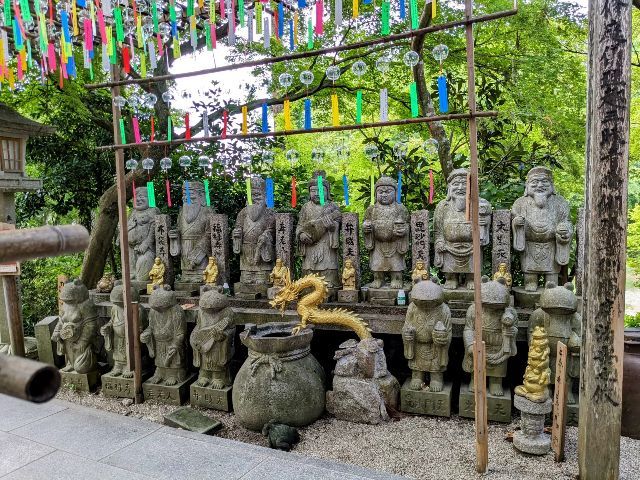
I didn’t expect the Frog Temple to be so cute and symbolic. It was quirky yet deeply cultural—really enjoyed it.
The frog statues at Nyoirinji Temple made me smile so much. It was a refreshing and lighthearted stop on the trip.
Our guide made the trip even more enjoyable. Friendly, knowledgeable, and very patient. Highly recommend!
The highlight for me was Dazaifu Tenmangu. The history and atmosphere there are unforgettable.
Perfect balance of history, fun, and relaxation. Visiting temples and then strolling in Yufuin was just ideal.
Loved the combination: spiritual shrines, a unique frog temple, and then a picturesque small town. Great variety!
A wonderful day trip from Fukuoka. Everything was smooth, relaxing, and full of interesting cultural experiences.
Yufuin felt like stepping into a postcard. The little shops, hot spring atmosphere, and stunning scenery made it magical.