One-Day Trip from Fukuoka: Karato Market in Kitakyushu, Moji Port, Kokura Castle and Sarakura Mountain
$43.36
Per Person
What To Expect
Overview
- Daily departures starting from July 1st, 2026; minimum 2 people per group. Chinese and English language services provided.
-
[Moji Ward] It preserves a large number of Western-style buildings from the Meiji and Taisho periods, full of retro and romantic charm. Strolling here, one can almost feel the rich history and cultural heritage of the past.
- [Karatoichiba] is a paradise for seafood enthusiasts. The market offers a dazzling array of fresh seafood, including plump sashimi, large and delicious crabs. You can fully experience the authentic Kitakyushu seafood and have a sensory overload.
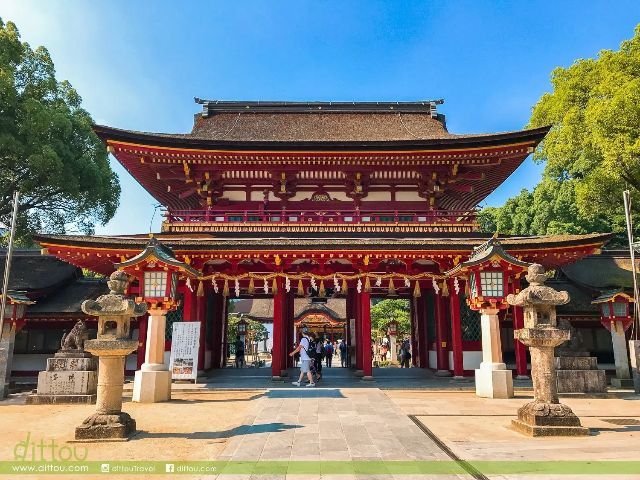
- Yasaka Shrine is situated within the grounds of Kokura Castle and is said to have a history of nearly 400 years. It is mainly dedicated to Susanoo-no-Mikoto. Local residents come here to pray for relief from illnesses and misfortunes, harmonious family life, prosperous business, safe travels and more.
- The Museum of Life Journey is located in Kitakyushu City and is one of Japan's largest comprehensive museums integrating natural history and human history.
- Kitakyushu Outlet & Mount Sarakura Night View
- Cherry blossom viewing at Kokura Castle is expected from late March to early April every year (all timings are subject to on-site weather conditions).
- New Year Holiday Period: Jan 1 - Jan 3; the destination will be changed from Miyajidake Shrine to Kitakyushu Outlet (the return trip may take longer)
Itinerary
Fukuoka -Moji Ward -Karatoichiba - Tsunoshima Bridge -Motonosumi shrine- Mekari PA - Return
11:00 Lawson Oriental Hotel Fukuoka (in front of Hakata Station Chikuguchi)
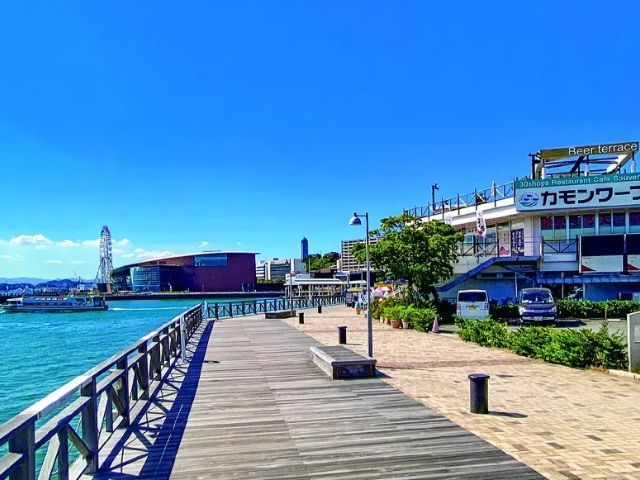
Karatoichiba
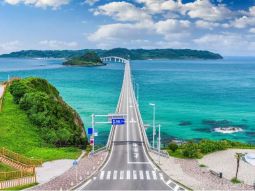
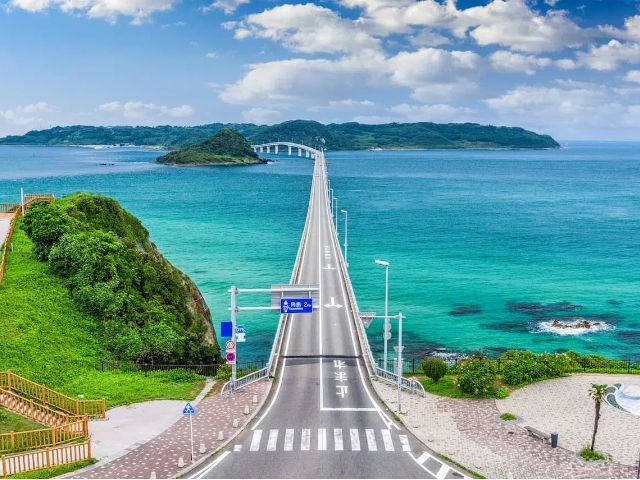
Tsunoshima Bridge
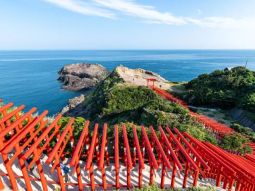
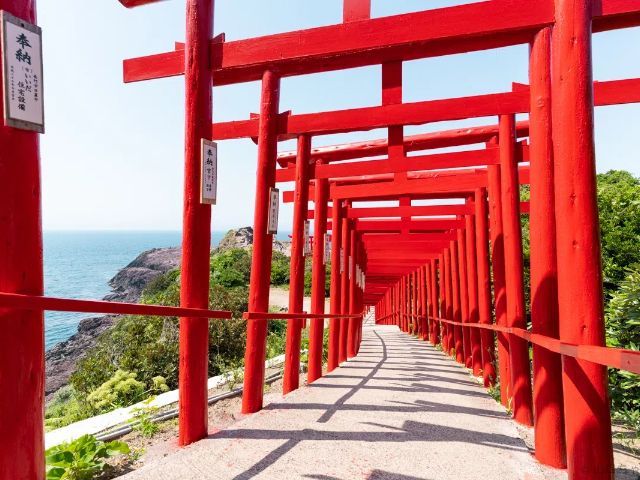
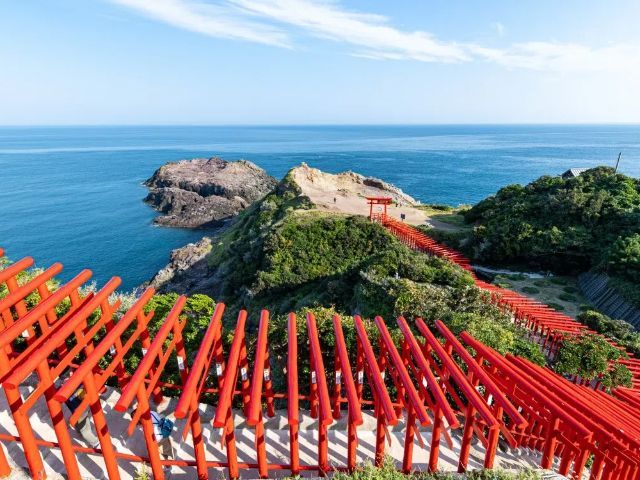
Motonosumi shrine
11:00 Fukuoka
Start today's beautiful journey.
12:20 Kitakyushu - Yamaguchi Prefecture
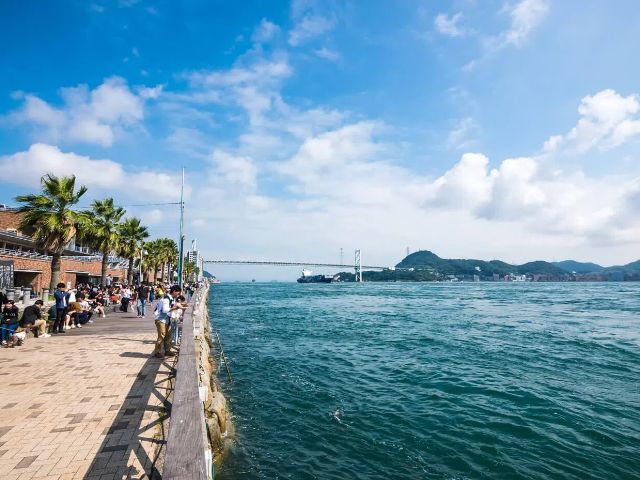
Port of Moji opened to foreign trade in 1889 and was once a thriving international trade port. The area is dotted with historic buildings and Western-style mansions constructed from the Meiji period to the early Showa era. Its nostalgic and elegant atmosphere creates a sense of travelling back in time, drawing a large number of tourists every year.
First up is the mixed-use commercial complex Kaikyo Plaza. Facing the sea, this facility boasts an open layout housing general stores, souvenir shops and restaurants offering stunning sea views, where visitors can enjoy shopping and dining to their hearts' content.
Besides, Moji Port Retro Tourist Product Hall (Minatoya) is another ideal spot for picking up local specialties. It features a tourist market and takeaway counter selling seafood harvested from the Kanmon Straits, with an extensive range of souvenirs from across Kyushu available.
For a laid-back experience, drop by cafs and restaurants renovated from sections of heritage buildings. Options include Caf Matire housed in the former Osaka Shosen Building, Mooon de Retro located in the old Moji Customs House, and Mitsui Club set inside the historic Former Moji Mitsui Club. Treat yourself to desserts, coffee and meals amid the distinctive charm of these Western-style mansions.
Below are the top recommended attractions here:
**Kyushu Railway History Museum**
This railway-themed amusement park was renovated from the former headquarters building of Kyushu Railway Company. Visitors can view passenger carriages operational during the Meiji era and a wide variety of railway models. The museum also displays railway-related items such as train tickets and emblems, alongside precious physical historical materials.
The train driving simulation experience lets visitors operate a train along the actual route between Moji Port and Orio while enjoying the scenery, offering an authentic locomotive driver experience that is extremely popular. There is also a miniature outdoor railway where visitors can operate genuine equipment including double tracks and signal lights to travel a 130-meter loop on their own. In the vehicle exhibition area designed to resemble a station platform, nine iconic trains that once ran across Kyushu are lined up in a striking display.
Optional Extra Fee: 300 Yen per person
**Former Moji Mitsui Club**
Constructed in 1921 as a reception and accommodation facility for Mitsui & Co., Ltd., this two-story half-timber and half-stone building hosted Dr. Albert Einstein, famous for the theory of relativity, and his wife during their stay in 1922.
Optional Extra Fee: 100 Yen for adults, 50 Yen for junior high school students and younger
**Moji Port Baked Curry**
Baked Curry is prepared by topping steamed rice with curry sauce, cheese and an egg before baking the dish in an oven. There are multiple origin stories for this local specialty. One version dates back to the 1950s, when a caf baked leftover curry in an oven in the style of gratin. The unexpectedly delicious dish became known as Baked Curry and gradually evolved into a signature local delicacy of Kokura.
Optional Extra Fee: 1,500 to 2,000 Yen per serving
**JR Moji Port Station**
A station operated by JR Kyushu, it was built in 1914 and later designated an Important Cultural Property of Japan. Upon alighting from the train at Moji Port Station, visitors are greeted by a wooden station building designed in the Neo-Renaissance architectural style. Boasting an elegant and nostalgic ambiance, this station serves as the perfect starting point for a tour of Moji Port.
The coach bus will not head to Shimonoseki. If you wish to visit attractions such as Karato Market, please take a ferry at your own expense. The one-way fare is 400 Japanese Yen per person.
Karato Market
Karato Market is located in Shimonoseki City, Yamaguchi Prefecture, and can be reached by a 10-minute ferry ride from the Moji Port Retro Area.
Every weekend (Friday, Saturday and Sunday) as well as on national holidays, the first floor of Karato Market is fully transformed into a seafood stall street named the Lively Maguan Street.
Vendors at Karato Market serve sushi, miso soup, deep-fried dishes and other delicacies made with ultra-fresh ingredients, and visitors can also enjoy pufferfish sashimi at a very reasonable price.
Ferry fee (at your own expense): 400 Japanese Yen per person for a single trip.
Japanese national holidays in 2025: July 21, August 11, August 13, August 14, September 15, September 22, September 23, October 13, November 3, November 24.
The seafood stall street Lively Maguan Street will be closed for business during Japan's year-end and New Year holidays (specific dates to be confirmed).
Li Hongzhang Road & Shunpanro
Li Hongzhang Road is situated in Shimonoseki City, Yamaguchi Prefecture, Japan, right in front of Shunpanro Restaurant next to Karato Market.
This historically significant small road is named after Li Hongzhang, an important minister of the late Qing Dynasty. The naming originates from the signing of the Treaty of Shimonoseki in 1895.
In 1895, the Qing government was defeated by Japan in the First Sino-Japanese War. Li Hongzhang was later dispatched by the Qing government to Shimonoseki, Japan, to hold negotiations with Ito Hirobumi, the Prime Minister of Japan. The negotiations took place in Shimonoseki, and the famous Treaty of Shimonoseki was signed there on April 17 the same year. This treaty exerted a profound impact on China, including the cession of Taiwan and the Penghu Islands, payment of war indemnities, and the opening of more treaty ports.
To commemorate this major historical event, Shimonoseki City named a road near the treaty signing site Li Hongzhang Road (Japanese: Rihonchō Dōri). Though the road is not long, it marks a pivotal turning point in modern Sino-Japanese history.
Akama Shrine
Akama Shrine is also located in Shimonoseki City, Yamaguchi Prefecture, Japan. It is a time-honored shrine featuring distinctive architecture and great cultural and tourism value. Dedicated mainly to Emperor Antoku, a young emperor in Japanese history, it is closely tied to the Genpei War in Japanese history, especially the Battle of Dannoura.
Originally known as Amida-ji Temple, it was converted into a shrine under the policy of separating Shinto and Buddhism during the Meiji Period. In the naval Battle of Dannoura in 1185, the eight-year-old Emperor Antoku drowned himself in the sea alongside his grandmother, the second wife of Taira no Kiyomori. The shrine was built to enshrine his spirit.
The main hall boasts a unique Ryūgū-zukuri (Dragon Palace Style) architectural design, resembling an underwater palace from fairy tales with a striking red-and-white appearance rarely seen among Japanese shrines. Its vermilion palace-like structure set against the blue sky and harbor backdrop makes it an ideal spot for photography.
15:30 Fukuoka Prefecture
Kokura Castle (approx. 50 minutes for free time)
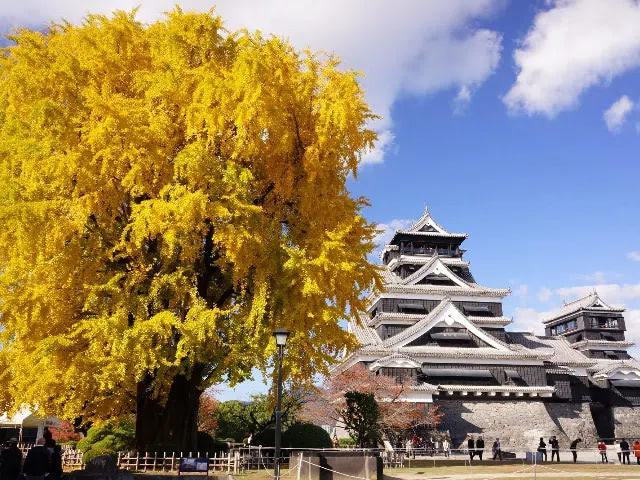
The keep of Kokura Castle features a Tang-style exterior, simple yet bold and imposing. It was founded by Hosokawa Tadaoki, who began governing Buzen and Bungo Provinces in 1600 with a domain stipend of 400,000 koku. Ogasawara Tadazane took over the governance of Kokura Castle in 1632, and from that point until the Meiji Era, the castle served as the residence of the Ogasawara clan for roughly 230 years across 10 generations. In 1866, Kokura Castle was burned down during the Keio Boshin War, losing its former prosperity. The present-day Kokura Castle was reconstructed in 1959.
Optional Extra Fee: Admission to Kokura Castle costs 350 Japanese Yen per person.
**Yasaka Shrine**
Nestled within the grounds of Kokura Castle, Yasaka Shrine boasts a history of nearly 400 years. It is primarily dedicated to Susanoo-no-Mikoto. Local residents come here to pray for recovery from illness, disaster prevention, harmonious family life, prosperous business and safe travels.
Additionally, the shrine is said to be extremely efficacious for prayers seeking romantic relationships, making it a favoured destination for couples and female visitors.
**Kokura Castle Garden**
Beyond the castle keep, the grounds of Kokura Castle are also home to a traditional Japanese garden.
Built on the former site of a secondary residence belonging to the Ogasawara clan, feudal lords of Kokura Domain during the Edo Period, Kokura Castle Garden is a cultural facility that recreates a feudal lord’s mansion and its attached garden. Designed as a pond stroll garden, it allows visitors to wander along the pond and admire the scenery. Japanese-style rooms overlooking the garden offer views of distinct seasonal landscapes all year round.
An exhibition hall features displays detailing the history of etiquette rooted in Japanese traditional values, alongside special themed exhibitions showcasing traditional Japanese daily life open to the public. Visitors can immerse themselves in the ambience of the Edo Period and leisurely experience authentic Japanese culture here.
Optional Extra Fee: A combined ticket for Kokura Castle and Kokura Castle Garden is available at 560 Japanese Yen per person.
**Cherry Blossom Season at Kokura Castle**
Every spring, around 300 cherry trees, predominantly Somei Yoshino cherry blossoms, bloom simultaneously in the castle park surrounding Kokura Castle. When in full bloom, pale pink and white cherry blossoms envelop the white castle keep, forming the iconic scenery of "castle framed by cherry blossoms" — one of Japan’s most iconic spring vistas. Visitors strolling along the moat and park paths can enjoy up-close views of the ancient castle paired with blooming cherry blossoms.
Particularly around the moat, reflections of cherry blossoms on the water blend with the castle walls and keep to form a profoundly historical spring scroll. The park sometimes hosts evening illuminations for night cherry blossom viewing, lending an extra romantic glow to the blossoms and drawing crowds of sightseers for photos.
Historically, the cherry blossom season typically falls from late March to early April (actual bloom period subject to local weather conditions).
**Seicho Matsumoto Memorial Museum**
This memorial museum is situated within the precincts of Kokura Castle.
Seicho Matsumoto was a renowned mystery novelist and one of Kitakyushu’s most celebrated literary figures. The museum documents his wide-ranging literary career through exhibits and informational panels. A massive 22-metre-long chronological timeline displays his life milestones and archival news footage, creating a striking visual impact. The museum’s mystery theatre screens original documentaries based on his landmark modern historical works including *The Sand Bowl* and *Points and Lines*.
Other facilities include an archive and reading room for researching materials related to Seicho Matsumoto, a merchandise shop selling exclusive original goods, and a tearoom.
Optional Extra Fee: A bundled pass covering Kokura Castle, Kokura Castle Garden and the Seicho Matsumoto Memorial Museum is priced at 700 Japanese Yen per person.
16:20 Fukuoka Prefecture
Visit the Journey of Life Museum or THE OUTLETS KITAKYUSHU (approx. 140 minutes for free time)
Journey of Life Museum
Located in Kitakyushu City, the Journey of Life Museum ranks among Japan’s largest comprehensive museums covering natural history and human history. Centered on the theme "The Birth and Evolution of Life", it guides visitors through 4.6 billion years of Earth’s history with massive dinosaur skeletons, dynamic exhibits and interactive installations.
Its most iconic attraction is a roughly 35-meter-long dinosaur exhibition zone, where numerous giant dinosaur skeletal specimens and animatronic dinosaurs vividly recreate the prehistoric world, greatly popular among families with children and dinosaur enthusiasts. Besides, it showcases the natural environment, mining development and progression of human civilization in the Kitakyushu area, making it a well-loved scenic spot that integrates education with entertainment.
Equipped with multimedia interactive zones and experience areas, the museum allows visitors to explore the mysteries of life evolution through sight, sound and touch, enabling easy sightseeing even for those with limited background knowledge in history or science.
Optional Admission Fees: Adults 600 Japanese Yen, High School Students 360 Japanese Yen, Elementary & Junior High School Students 240 Japanese Yen, Free entry for children below elementary school age.
Closed during year-end and New Year holidays as well as pest control periods.
※ Due to annual pest control operations this fiscal year, the museum will be closed from Thursday, January 28, 2027 to Thursday, February 4, 2027 (Reiwa 9).
THE OUTLETS KITAKYUSHU
Officially opened in 2022, THE OUTLETS KITAKYUSHU is one of Kyushu’s newest large-scale shopping malls. It houses over 170 stores featuring international brands, popular Japanese labels and specialty outdoor & sporting goods shops with year-round discounted prices.
Beyond shopping, the complex features a food court, specialty restaurants and rest areas, allowing visitors to savor local Kyushu delicacies while shopping. Adjacent to Yahatahigashi Ward and Kitakyushu Science Museum, it boasts a spacious and pleasant surrounding environment ideal for family trips.
Boasting a diverse range of brands covering apparel, sporting goods, fashion accessories, cosmetics and daily necessities, it stands as one of Kitakyushu’s most popular shopping destinations, perfect for luxury shopping and souvenir hunting.
Optional Expense: Self-funded shopping based on personal consumption.
19:00 Fukuoka Prefecture
Observation of Mount Sarakura Night View (approx. 50 minutes for free time)
Standing at an altitude of about 622 meters in Yahatahigashi Ward, Kitakyushu City, Mount Sarakura is one of Kitakyushu’s most iconic viewing spots. The observation deck at the summit offers a panoramic view of Kitakyushu urban area, Dokai Bay, Kanmon Straits and surrounding industrial zones.
The night view of Mount Sarakura is honored as one of Japan’s New Top Three Night Views alongside Mount Hakodate in Hokkaido and Wakakusa Mountain in Nara. After dark, city lights blend with harbor scenery to form a glittering sea of illumination, earning it the reputation of a "Million-Dollar Night View".
Visitors can take the cable car and ropeway to ascend the mountain slowly, enjoying the stunning transition from dusk to night scenery along the way. On clear days, Kanmon Straits and Shimonoseki City are visible in the distance, making this a top pick for photography enthusiasts and couples.
Visibility for the night view reaches its peak in winter thanks to crisp air; twinkling lights interweave with the harbor nightscape to showcase the distinctive charm of Kitakyushu as an industrial metropolis.
Optional Fees:
Round-trip combined ticket for Mount Sarakura Cable Car & Ropeway
Approx. 1,230 Japanese Yen per adult (subject to on-site pricing)
Kind Reminder: Opening hours, cable car service and ticket prices are subject to change without prior notice. It is recommended to verify relevant information via official channels before your trip.
21:00 Fukuoka Prefecture
Arrive at Hakata Station and conclude the itinerary
- Meals not included
- Hotel not incuded
- 21:00 Return to the pick-up point, the return time is for reference only.
-
Things to Know
- *The above itinerary time may be adjusted according to weather, road conditions and other reasons. Please understand.
Packages
Bus Tour
Adult
$43.36Child
Same as Adult
Pick Up/Drop Off Information
Pick Up
| Location | Time | Address |
| Lawson, Fukuoka Oriental Hotel (in front of Chikushi Exit of Hakata Station) Please arrive 10 minutes prior to the scheduled time. | 11:00 | 4-23 Hakataekichuogai, Hakata Ward, Fukuoka, 812-0012, Japan |
Drop Off
| Location | Time | Address |
| Lawson, Fukuoka Oriental Hotel (in front of Chikushi Exit of Hakata Station) The return time is for reference only and subject to the actual situation on the day. | 21:00 | 4-23 Hakataekichuogai, Hakata Ward, Fukuoka, 812-0012, Japan |
Things to Know
Included/Exclude
- Vehicle service fees listed in the itinerary
- Vehicle fuel costs, tolls, and highway tolls
- Vehicle service time: within 10 hours (Japanese law)
- Guide service fee: for groups of 10 or fewer, a sea lion (guide work as driver); for groups of up to 17, a coach; for more than 17, a minibus or bus. The actual vehicle will be adjusted based on the number of participants on the day of departure.
- Vehicle service fees listed in the itinerary
- Vehicle fuel costs, tolls, and highway tolls
- Vehicle service time: within 10 hours (Japanese law)
- Driver service fee (exquisite small group of 1-13 people; bus group of 14-45 people, actual will be adjusted according to the number of people in the group on that day)
- Reference model:5-8Car: ToyotaAlphardor equivalent;9-14Car: ToyotaHAICEor equivalent;18-22Vehicle: minibus;twenty twoCars and above: large buses. The above vehicles are for reference only. The actual number will be adjusted according to the number of people traveling on the day.
- Children under 3 years old are free of charge without occupying a seat. Please inform us in advance when registering; children over 3 years old are treated as adults.
- Lunch
- Ferry Experience - Shutdown Steamboat
- Accommodation expenses, meals, local self-funded projects and other personal consumption expenses
- One-day Tour, it is not recommended to carry luggage, if you need to carry luggage, please register clearly when you book your order. 1 luggage is allowed per person. An extra 100 yuan per piece will be charged if you failed to make a note when booking your order or if it turns out more than 1 piece of luggage per guest.
- Other items not mentioned in the above [fee included]
Booking and Confirmation Process
- Due to high demand, inventory is mostly synchronous but sometimes not. Our consultant will check real time availability onsite and confirm seats.
- You will receive your booking information instantly via email. In the event that you do not receive our email, please check your spam folder, or log into your User Center to check your order status and download your voucher when available.
How To Use
- The night before the tour, you will receive a departure reminder email in your mailbox, which contains the vehicle registration number, the contact information of the guide and the pick up time. Guides do not initiate contact with guests.Please wait for the bus at the specified location according to the meeting time in the email.
- One-day trip itinerary, it is not recommended to carry luggage, if you need to carry luggage, please register clearly when you book your order. 1 luggage is allowed per person. An extra 100 yuan per piece will be charged if you failed to make a note when booking your order or if it turns out more than 1 piece of luggage per guest.
- Once confirmed, the date cannot be changed, late or no-show will be non-refundable.
- Be sure to provide complete information (name + number of people + phone number + WeChat ID + pick-up location) when making a reservation to avoid errors that may affect the itinerary.
- During the trip, please carry your passport and valuables with you and keep them safe. If there is any loss, theft, damage, etc., you will be responsible for it yourself.
- Elderly people, patients with cardiovascular diseases such as hypertension, heart disease, and pregnant women are advised to be accompanied by relatives.
- This trip does not accept solo registration from customers under the age of 18. If you want to register, please ask your guardian to sign up for this trip together.
- This itinerary is a fixed itinerary for carpooling. Customers who are also participating in this itinerary must abide by the stay time at each attraction and follow the driver's arrangements. If you want to flexibly adjust your itinerary, please refer to our chartered tour service.
- Please note that if you fail to participate or cancel the trip due to personal problems, lateness, etc., no fees will be refunded.
- If a person leaves the group on his own during the trip, the transaction will be deemed invalid and no fees will be refunded. And if this results in personal or property safety, you must bear the consequences yourself.
- The arrival time of each trip may change due to traffic conditions, weather, festivals, and crowds on the day. If the trip is delayed or canceled due to the aforementioned or other force majeure factors, please forgive me and you will not be able to request a refund.
- Please wear light, suitable travel clothing and shoes to participate in this trip.
- Please be sure to abide by local laws and regulations in Japan, and do not carry items prohibited by Japanese law to avoid violating the law and affecting your own rights and interests.
- When moving freely, you should pay attention to your own personal and property safety. If you fail to listen to advice and an accident occurs or causes losses, you will be responsible for the consequences.
- Traffic jams may occur on weekends and red days, so if you are worried about traffic jams, you can avoid joining the tour on weekends or red days.
- Infants aged 0-2 years old without occupying seats are free of charge; please inform the number of infants in advance when placing an order. If you do not specify the number of children under 3 years old without seats in advance, resulting in insufficient space in the car or overcrowding, the driver and guide have the right to refuse to get on the car, and the fee will not be refunded.
- Reference models: 9-14-seat car: Toyota HAICE equivalent level; 18-22-seat car: minibus; 22-seat car or more: large bus, the above vehicles are for reference only, the actual number of people will be adjusted in accordance with the number of tours on that day.
- Children under 3 years old are free of charge without occupying a seat. Please inform us in advance when registering; children over 3 years old are treated as adults.
Terms & Conditions
What is the cancellation policy?
Cancellation Period
Policy
What if you miss the appointed time or departure date?
Once the booking is confirmed, an absence or failure to show up on the scheduled date or time is a no-show. No refunds or reschedules will be issued for no-shows and late arrivals.
Other important information
- Seniors aged 70 years and above (inclusive) must ensure that they are in good health and suitable to travel, and must be accompanied by family members or friends over the age of 22 throughout the trip.
- Minors under the age of 18 must be accompanied by at least one adult passenger throughout the trip.
- The elderly need a health certificate. To check the health certificate, please fill it out and submit it to the registration office before traveling (electronic version is available).
- Pregnant women, people with heart disease, fear of heights and other special groups are not suitable to participate in this tour. There is a risk of being rejected. Please book with caution.
- This product can be booked by non-mainland guests, but it does not provide language services other than Chinese and Japanese. Please understand.
- The night before the tour, you will receive a departure reminder email in your mailbox, which contains the vehicle registration number, the contact information of the guide and the pick up time. Guides do not initiate contact with guests.Please wait for the bus at the specified location according to the meeting time in the email.
- Due to the unpredictability of traffic conditions, weather, festivals or crowds on the day, the arrival time of each itinerary may change. According to Japanese law, the maximum working time for drivers is 10 hours. In order to ensure the safety of the driver and the stability of driving, the itinerary may be adjusted according to actual conditions, including reducing the time spent visiting attractions or canceling certain attractions. We sincerely hope that all passengers can understand and support the adjustments we have made while ensuring safety.
- Seniors aged 70 years and above (inclusive) must ensure that they are in good health and suitable to travel, and must be accompanied by family members or friends over the age of 22 throughout the trip.
- The elderly need a health certificate. To check the health certificate, please fill it out and submit it to the registration office before traveling (electronic version is available).
- Minors under the age of 18 must be accompanied by at least one adult passenger throughout the trip.
- Pregnant women, people with heart disease, fear of heights and other special groups are not suitable to participate in this tour. There is a risk of being rejected. Please book with caution.
- In the event of the aforementioned or other force majeure factors, we deeply regret any inconvenience this may cause you. Please understand our position, we will not be able to provide refund services for this reason. This decision was made out of responsibility for the safety of drivers and passengers, and to ensure the smooth running of the entire team.
- We are always committed to providing you with the best travel experience, but in some cases we need to be flexible and adjust our itinerary plans based on actual conditions. Thank you for your understanding and support. Other force majeure factors may include but are not limited to: Natural disasters: Natural disasters such as earthquakes, volcanic eruptions, floods, typhoons, etc. may affect the itinerary. Traffic Accidents: Road traffic accidents, traffic jams, etc. may cause travel delays. Weather conditions: Severe weather conditions, such as heavy snow, heavy rain, fog, etc., may affect transportation and itinerary arrangements. Government regulations: Emergency regulations, traffic controls, etc. issued by the government may cause changes to the itinerary. Health Emergencies: Sudden health problems of travelers or team members may require first aid and emergency treatment, resulting in changes to the itinerary. Social events: Strikes, protests, social unrest, etc. may have unpredictable impacts on transportation and itineraries. Mechanical Failure: Mechanical failure of a vehicle, such as a vehicle, may cause travel delays.
- When moving freely, you should pay attention to your own personal and property safety. If you fail to listen to advice and an accident occurs or causes losses, you will be responsible for the consequences.
- During the trip, please carry your passport and valuables with you and keep them safe. If there is any loss, theft, damage, etc., you will be responsible for it yourself.
- Please note that if you fail to participate or cancel the trip due to personal problems, lateness, etc., no fees will be refunded.
- Please be sure to abide by local laws and regulations in Japan, and do not carry items prohibited by Japanese law to avoid violating the law and affecting your own rights and interests.
- Infants aged 0-2 years old without occupying seats are free of charge; please inform the number of infants in advance when placing an order. If you do not specify the number of children under 3 years old without seats in advance, resulting in insufficient space in the car or overcrowding, the driver and guide have the right to refuse to get on the car, and the fee will not be refunded.
- Please wear light, suitable travel clothing and shoes to participate in this trip.
- Please note that if you fail to participate or cancel the trip due to personal problems, lateness, etc., no fees will be refunded.